
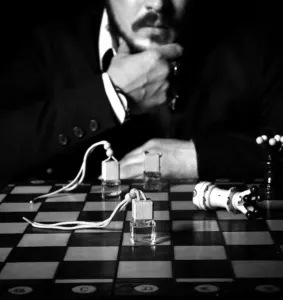
Sometimes, one head is better than two
In Consilience: The Unity of Knowledge (1998), E.O. Wilson warned against overspecialization, arguing that it leads to less competence than more. Wilson described the synergistic expansion of knowledge derived from exposure to multiple disciplines, despite having less time for each.
This notion is often resisted. People tend to view general knowledge as less valuable than wisdom gained from deep study of a particular subject. After all, a jack of all trades, a master of none.
What about the law, a profession prone to specialization? The accolades there largely accrue to those whose expertise has been sharpened to such a point that even angels may fear dancing upon it. The result: a cascade of referrals subdividing clients into ever thinner slices.
Every year I tell my house league hockey teams that no matter what your favourite position (usually forward), everybody is going to play some defence. Attackers (and defenders) have an advantage if they know intimately how the other thinks and feels and experience is the best teacher.
This applies also to the law. After articling in criminal law, I started a sole practice right out of the gate. It skewed criminal because of my training but before long I had a small stable of family law cases.
I noticed a trend. My criminal and family law practices were feeding each other. Moreover, clients facing both problems often obtained better results at less cost when I took carriage of each aspect. Sometimes, a need would reveal itself explosively. In an initial consultation for domestic assault, potential frailties in the Crown’s case might emerge leading me to commend the defendant for remaining silent under police questioning. He or she might blanch visibly, disclosing that an explanatory affidavit had been filed in family court.
It could go the other way too. Pyrrhic victories are best spotted early. If you’re married to a good man or woman whom you betrayed, and it led to a scene where you pushed or slapped them, that might not be the time to stand on reasonable doubt, even successfully. You may win the battle but lose the war. It may be better to acknowledge your imperfection and settle for a peace bond or a conditional discharge, despite a viable defence. The reward might include a return home, a relationship with a forgiving spouse and loving children, a happy life, and lots of money saved in family court. A good doctor treats the whole patient, not just the immediate condition or symptoms.
On the other hand, sometimes a nefarious spouse abuses the criminal process to obtain advantage in family proceedings, most effectively by inventing a charge to exclude their partner from the home or to bolster a status quo for custody. Sadly, it works unless criminal counsel quickly unmasks the fraud, which is easier if you already know the family case inside out.
These are just some examples, but overall, it was easier to navigate the precarious overlapping terrain as the only lawyer. If I was diligent, I was seldom taken by surprise, and usually at an advantage. Judges often had questions that only I could immediately answer. What’s happening on the criminal matter, counsel? What’s the status of the family proceedings? If you were seen as a straight shooter the answer usually helped.
None of this is to suggest that there are no advantages to sticking to one thing only. You are less plagued by fear that you are missing something (though discomfort can eventually render you more knowledgeable than you realize). But when things intersect, as they often do in criminal and family law, suddenly you are the expert, in the moment at least. For as the actual saying goes:
A jack of all trades, a master of none, but oftentimes better than a master of one.
If you are dealing with overlapping criminal and family law matters, David Gomes and Hummingbird Lawyers LLP’s criminal defence and family law teams can help. Please contact us to book a consultation.
This article is meant to provide a general overview and does not constitute legal advice. If you require legal advice, please contact us.